Mapping Prize Pool Expansions to Engagement Cycles in Sweepstakes Slot Communities
Ellis Krüger · Sep 28, 2026
Mapping Prize Pool Expansions to Engagement Cycles in Sweepstakes Slot Communities
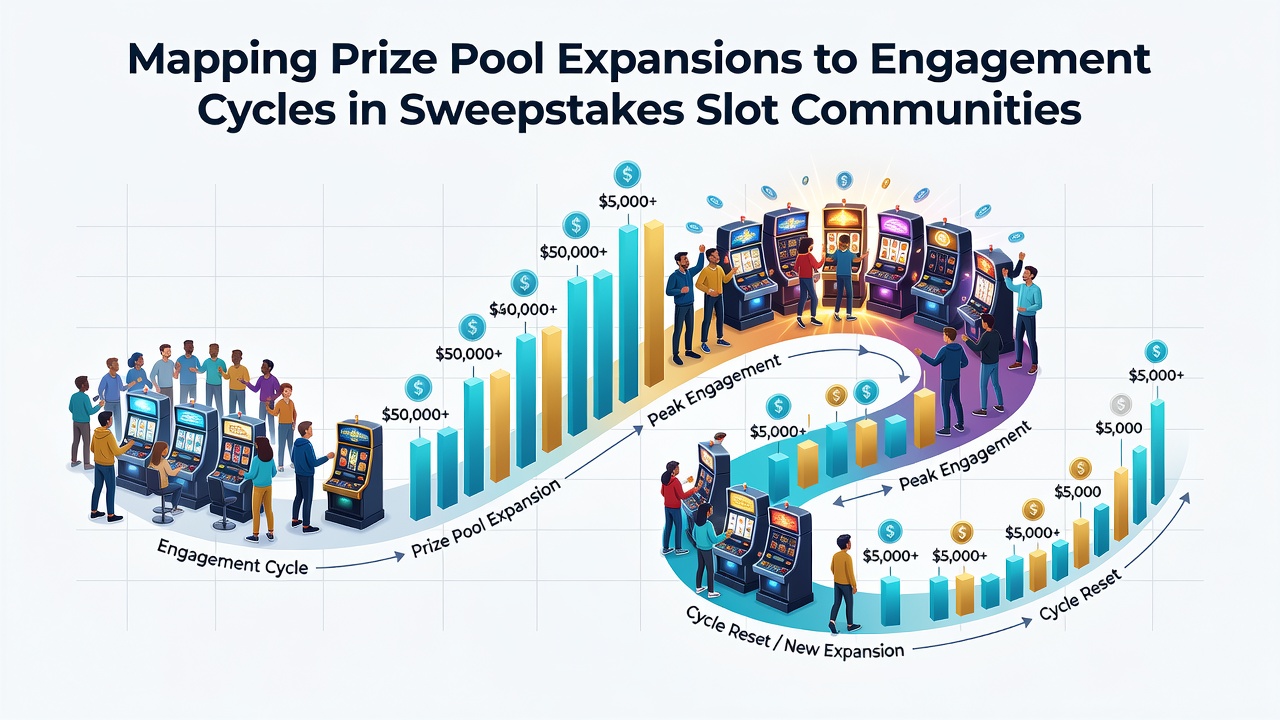
Platforms that operate sweepstakes slot communities track prize pool expansions against distinct phases of player activity, and data from multiple operators shows consistent patterns across regions. These expansions often align with entry-level participation, sustained daily interactions, and tournament-driven peaks, while September 2026 records indicated measurable lifts in both pool sizes and session durations during specific calendar windows.
Entry-Level Pools and Initial Participation Patterns
Smaller prize pools frequently appear during onboarding periods when new accounts receive starter sweeps coins or promotional entries. Observers note that these modest expansions coincide with first-week activity spikes, where completion of basic tasks such as profile verification or initial spins unlocks incremental additions to the shared pool. Research from the American Gaming Association indicates that communities using tiered pool releases at signup see higher retention rates through the first fourteen days compared with static-pool models.
Operators adjust these early pools based on aggregate login data rather than individual behavior, which keeps the mechanism scalable across thousands of accounts. Figures from platform analytics dashboards reveal that pool growth at this stage tends to remain modest, often increasing by single-digit percentages per completed milestone, yet the visibility of a rising total encourages continued logins without requiring large individual wagers.
Mid-Cycle Growth During Routine Play
Once accounts move past the onboarding window, prize pools expand through mechanisms tied to repeated sessions and social features. Daily login streaks, friend referrals, and mini-challenges contribute small increments that accumulate over weeks. Those who have examined multi-month datasets find that mid-cycle expansions accelerate when communities introduce time-limited events, such as weekend coin multipliers or collaborative goals that add fixed amounts to the pool once thresholds are met.
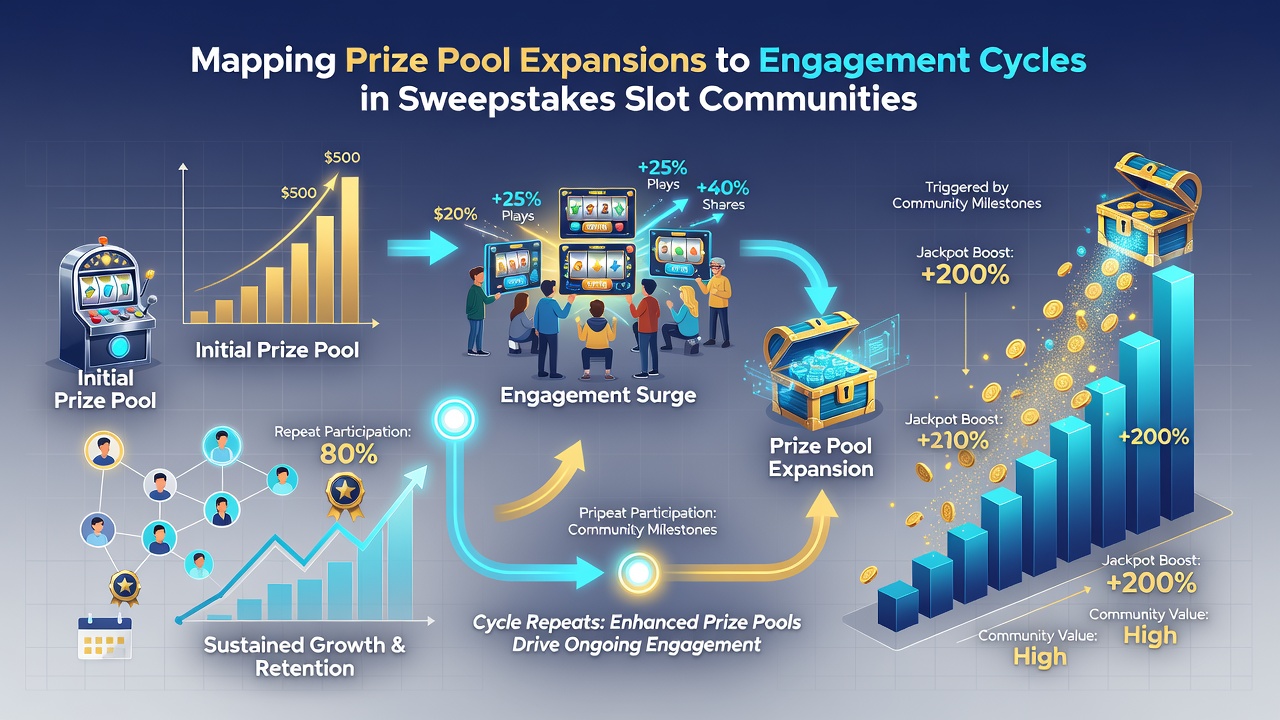
Platform telemetry collected in 2025 and early 2026 demonstrates that these routine expansions maintain engagement plateaus by offering visible progress markers. A report issued by the Malta Gaming Authority highlighted similar dynamics in European sweepstakes-style products, noting that pool visibility functions as a soft retention tool during periods when individual prize odds remain unchanged. The expansions occur at predictable intervals, typically every three to five days of consistent activity, and correlate with stable rather than explosive session counts.
Tournament Phases and Accelerated Pool Increases
Larger expansions become prominent during tournament cycles when entry fees in sweeps coins or bonus entries feed directly into the prize pool. These events create step-function jumps rather than gradual increments, with pool totals sometimes doubling or tripling within forty-eight hours of tournament registration opening. Data collected across multiple handheld and desktop platforms shows that peak engagement windows align with these jumps, as players increase both frequency and duration of play to qualify for leaderboard positions that unlock additional pool contributions.
September 2026 tournament calendars included several overlapping events that produced record pool sizes for participating communities. Analysts tracking hourly metrics observed that the steepest rises occurred when multiple operators synchronized start times, allowing cross-platform leaderboards to feed a shared expansion fund. Such coordination appears in operator reports as an efficient way to concentrate attention without proportionally increasing marketing spend.
Measurement Approaches Across Communities
Operators employ several quantitative methods to map pool changes to engagement cycles. Cohort analysis divides users by registration month and tracks pool contribution rates against session frequency, while heat-map visualizations overlay pool size against daily active user counts. These approaches reveal that pool expansions serve different functions at each stage: signaling opportunity early, sustaining momentum mid-cycle, and concentrating competition during tournaments.
Academic work published in the Journal of Gambling Studies has examined similar structures in free-to-play gaming economies and found parallel correlations between visible resource growth and repeat visits. Although the study focused on broader mobile game mechanics, the underlying pattern of progressive pool releases matches observations recorded in sweepstakes slot environments.
Conclusion
Mapping prize pool expansions to engagement cycles provides operators with a framework for timing releases that match observed player rhythms. Records from 2026 demonstrate that gradual mid-cycle increases support steady participation, while tournament-linked jumps produce concentrated activity spikes. Continued collection of session and contribution data across regions will likely refine these alignments as platforms adjust pool mechanics to evolving usage patterns.